
Juan Pablo Arévalo
Foto periodista
Juan Pablo took part in the photography residency in February 2026. A journalist and photographer, he shares his view of one of the most characteristic festivals of the Peruvian Andes, the Andean Cross festival.
High in Peru's Cordillera Blanca, a festival still survives that dates back to before the arrival of the Spaniards and offers an intimate look at a culture that has withstood the passage of time intact.
When the Spaniards reached the Peruvian Andes during the conquest, they were astonished by what they found. A highly organized and complex Inca empire covering a large part of the continent, sophisticated stone architecture and, perhaps most baffling to them, a spirituality that held nature and its elements sacred. Mountains, rivers and stones (huancas, which are sacred stones) were revered there, and rituals asked them for protection and good harvests. That went on until the colonizers gradually replaced the huanca with the Christian cross as the new symbol of reverence; where there had once been huancas, crosses were later raised.
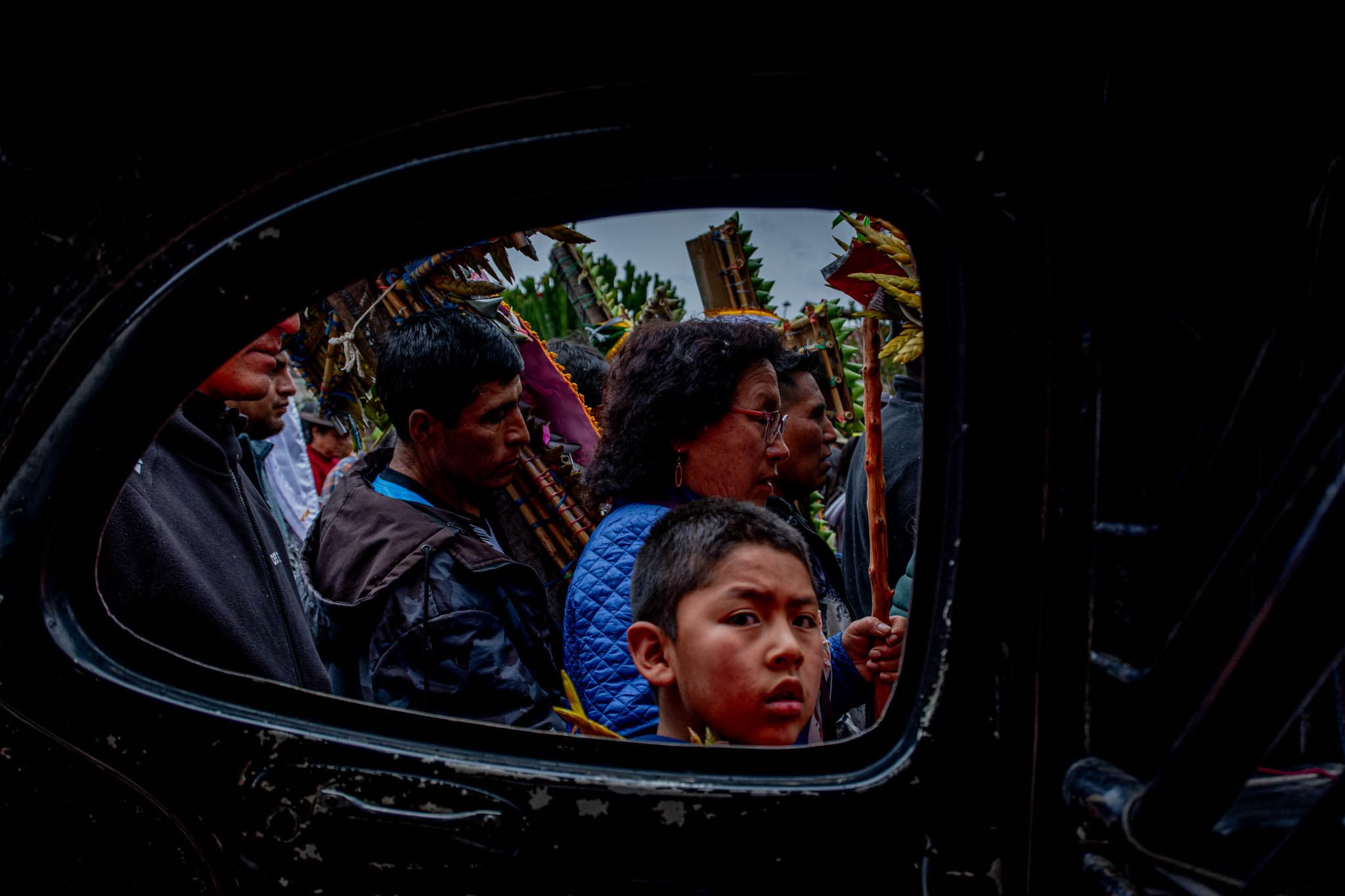
Today, after centuries of syncretism, the cross has kept its place as an object of veneration. The object changed, but the rituals remain the same. And there are towns in the Andean highlands of Peru that once a year decide to honor this Christian symbol. In the heart of the Cordillera Blanca, in Chavín de Huántar and Huaraz, in the Áncash Department, entire communities gather to celebrate the traditional Fiesta de la Cruz Andina, a festival that has been held for centuries and offers a glimpse into a culture that seems to have stopped in time. For four days the Christian cross is venerated, a cross that in these parts of the Andes also stands for protection, the fertility of the land and a bond with the sacred mountains. Days of celebration that combine mysticism, dancing, music and, above all, alcohol.
The festival has been organized this way for years. Each village has its own crosses, which they adorn with flowers, embroidered cloth and offerings. Once they are ready, the crosses begin to arrive from different corners of the highlands at the main square and church, where the priest celebrates a Mass to bless each one. Then a procession winds through the whole town, passing houses, shops and even the cemetery, where the party goes on. The processions can last several hours, and every rest along the way is a reason to keep up the music, the drinking and the dancing. Finally, the crosses are carried to the top of the hill and set in place on the heights to watch over the village until they are replaced the following year.
Each edition of the Fiesta de la Cruz Andina is organized and financed by a person or a family group, known as mayordomos. They are in charge of covering the costs of the celebration, hiring the music bands and preparing food and drink for all the participants. Being a mayordomo puts you in a position of social prestige and is sometimes taken on as a vow or an act of devotion. This year's host, in the little village of Macashca, is the young son of a well-off family, not yet 20. As a thank-you, neighbors pin banknotes to his clothes, which he accepts shyly. They give him cloth, clothing and plenty of beer, all of which will be drunk that very day amid the dancing. He leaves early, but the party will last until the early hours of the next day.
But the last day of the festival is the most striking. It is the “Tuesday of war” in Huaraz. If on the previous days people threw water and flour at one another, here oil, soil and plenty of paint are added. Shops close and cover themselves in plastic, the police cut off the streets, and a real pitched battle breaks out in every corner of the city, where anything goes except dirtying the grandparents or the cholitas, who stroll spotless through the chaos. Foreigners (or gringos, as everyone is called) are the ones in the greatest danger.
The festival is crowned at night with a great ‘yunza’: the felling of a tree laden with offerings to celebrate fertility and abundance. The tree symbolically represents life, nature and the fertility of the land. As it falls and scatters its symbolic fruits (the gifts), it celebrates the abundance the community hopes to receive.
The Fiesta de las Cruces ends, and peace, silence and calm return to the area. These are villages more than 3,400 meters above sea level that keep their traditions, their language and their customs, working the land and tending livestock, and that amaze with the beauty of their simplicity. This journey was part of a documentary photography residency organized by Puttutu Expediciones, with the award-winning Chilean photographer Tomás Munita as mentor. It is a region well worth exploring and a culture that stands as living testimony to the earliest days of civilization in the Americas.
More than the crosses
Chavín de Huántar, though little known on the tourist trail, holds an archaeological treasure that has survived for more than three thousand years. Belonging to the Chavín culture, the Chavín archaeological site was an enigmatic and powerful religious sanctuary where people, after long pilgrimages, came seeking spiritual transformation. Its network of underground galleries gave the place an acoustic power which, combined with music, smoke and plants, worked toward the healing of the spirit (transformation through knowledge).
In 1985 it was declared a UNESCO World Heritage Site, the third in the country after Machu Picchu and the city of Cuzco. Inside, in an underground gallery, stands a monolith 4.5 meters high called the Lanzón, which represents a hybrid deity, a blend of human and animal (three animals, the feline, the serpent and a bird, which embody the three worlds and transformation).
The documentary photography residencies take place twice a year, in February and September, organized by Puttutu Expediciones.